
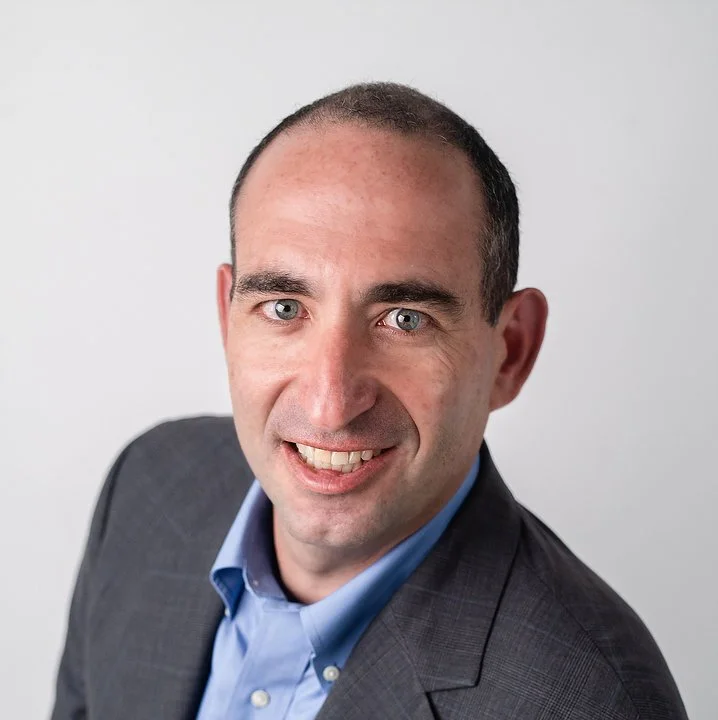
By Paul N. Barger, Esq., Barger & Gaines
The data is undeniable: bullying in American schools has reached crisis levels and is trending in the wrong direction. After a brief decline during the COVID-19 pandemic, recent statistics paint a troubling picture of escalation that demands immediate legislative action.
A Growing Epidemic
Among students ages 12-18 in grades 6-12, approximately 19.2% reported being bullied on school property during the 2021-2022 school year,[1] This is down from 22% in 2018-2019 and 28% in 2010-2011, but concerning trends persist. The problem is particularly acute in New York City, where more than half of the roughly 355,000 middle and high school students surveyed in 2024 reported their classmates sometimes or often bullied, harassed, or intimidated each other, an alarming statistic that is up from 44% in 2019.[2]
The digital age has created new avenues for harassment. Roughly 43% of students surveyed reported seeing regular incidents of bullying and harassment online in 2024.[3] This is compared to 35% in 2019.[4] Even more troubling, 40% of students surveyed reported having witnessed harassment based on race, ethnicity, religion, or immigration status, which is up from 30% in 2019.[5]
These aren’t just numbers on a page. Behind each statistic is a child whose education, mental health, and future are being compromised. Students who experience bullying report higher rates of anxiety, depression, and suicidal ideation, while also showing decreased academic engagement and achievement.[6] The impact is staggering: among bullied students, anxiety symptoms affect 29.8% compared to 14.5% of non-bullied students, while depression symptoms impact 28.5% versus 12.1%.[7]
The Failure of Current Laws
Despite good intentions, our current anti-bullying framework has proven inadequate. While all states now have anti-bullying laws, it took 15.5 years from the time the first state passed its law in 1999 to achieve total coverage in 2014.[8] New York’s primary anti-bullying law, the Dignity for All Students Act (DASA), was signed in 2010 and implemented in 2012.[9] The law requires schools to regularly report data and trends related to harassment, bullying, and discrimination,[10] but reporting alone hasn’t solved the problem.
The fundamental issue is that current laws lack teeth. As Nancy Willard, director of the advocacy group Embrace Civility in the Digital Age, noted, “The laws are a necessary foundation because they say we will do something, but just ‘doing something’ isn’t sufficient”.[11] This observation is supported by hard data: reported rates of bullying have remained stable since the first anti-bullying laws took effect in 2005.[12] In other words, despite nearly two decades of legislation, we haven’t moved the needle on reducing bullying.
The lack of meaningful consequences is glaring. Five states don’t have any form of sanctions for bullying included in their anti-bullying laws, while only 12 states include criminal sanctions for acts of bullying.[13] Even when consequences exist, they’re often so minimal that they fail to deter future behavior. Without real accountability, bullies continue their harmful actions, knowing they face little more than a slap on the wrist for their behavior.
Funding represents another critical failure. According to the most comprehensive available research (as of 2017), only 12 states had any funding provisions that would provide financial support for policy training and prevention programs.[14] Schools are expected to combat bullying without the resources necessary to implement effective interventions, train staff, or provide adequate counseling services.
The Silent Suffering: Why Victims Don’t Speak Up
Perhaps most troubling is the hidden nature of the bullying crisis. Only 44.2% of students between the ages of 12-18 who were bullied during the school year notified an adult at school.[15] This means that more than half of all bullying incidents go unreported, creating a vast undercurrent of suffering that adults never see.
The reasons for this silence are complex and heartbreaking. Fear of retaliation tops the list, especially when the bully is a popular student.[16] Children worry about being labeled a “snitch” and facing even worse harassment for speaking up. Many students fail to report bullying out of this fear and the fear of retaliation.[17]
Shame plays an equally powerful role.[18] Children may be ashamed and feel like they somehow deserved the abusive behavior.[19] This self-blame intensifies around age 10, when kids start to feel a sense of shame related to being bullied, with many claiming they thought they deserved the bullying.[20]
A Blueprint for Change
New York needs legislation that goes beyond symbolic gestures to create real consequences and meaningful change. The solution requires a comprehensive approach that addresses prevention, intervention, and accountability at every level.
First and foremost, the state must establish clear, graduated consequences that escalate with repeated offenses. Initial violations should trigger mandatory counseling for the aggressor, parent notification, and formal documentation. Second offenses must result in automatic suspension, completion of anti-bullying education programs, and mandatory parent conferences. For third offenses or severe cases, extended suspension, alternative education placement, and psychological evaluation should be required. When bullying crosses into criminal territory—causing documented physical or psychological harm—the consequences must include potential transfer to alternative schools and juvenile justice involvement. Importantly, any such framework must balance accountability with due process protections for accused students and should incorporate restorative justice approaches alongside punitive measures, as research suggests that punitive approaches alone are insufficient to change school climate.
Currently, New York doesn’t have a criminal statute devoted specifically to cyberbullying. This gap must be closed. The state should establish cyberbullying as a distinct offense with penalties ranging from misdemeanors to felonies based on severity. Cases involving bullying that leads to suicide or self-harm attempts must carry the most serious consequences.
School districts themselves need to face accountability. The current system allows administrators to minimize or ignore bullying without consequence. New legislation should mandate reporting of all incidents to a state database, with financial penalties for districts showing persistently high rates. Schools that fail to implement required programs should face loss of state funding, and administrators who ignore or cover up serious bullying should face personal liability.
Protecting victims and those who report bullying is equally crucial. The law should provide for automatic restraining orders between bullies and victims, guaranteed class schedule changes to separate parties, and robust anonymous reporting systems with mandatory follow-up. Antiretaliation provisions must protect students who come forward, with strict investigation timelines ensuring swift response.
None of these measures will succeed without adequate funding. The state must provide dedicated resources for anti-bullying programs, counseling services, staff training, and technology infrastructure to combat cyberbullying. Schools cannot be expected to solve this crisis with good intentions alone.
Recent Progress and Remaining Gaps
New York has taken some positive steps. In October 2025, Governor Hochul signed the Jack Reid Law, requiring private schools to adopt anti-bullying policies after a 17-year-old student died by suicide following persistent bullying.[21] This law honors the memory of a young life lost too soon, but it addresses only private schools and lacks comprehensive enforcement mechanisms.
Similarly, a proposed bill would make cyberbullying a misdemeanor punishable by up to one year in jail and $1000 in fines.[22] While this represents progress, it’s only one piece of a much larger puzzle. Without systemic reform addressing school accountability, victim protection, and prevention programs, such measures remain insufficient band-aids on a gaping wound.
The Cost of Inaction
Every day we delay comprehensive reform, more children suffer in silence. With one in five students experiencing bullying and cases of suicide linked to persistent harassment,[23] the human cost of inaction is measured in young lives damaged or lost. The long-term societal costs are equally staggering, as victims carry psychological scars into adulthood, requiring ongoing mental health services and struggling with relationship, education, and employment.
The economic argument for action is compelling. Investing in prevention and early intervention costs far less than dealing with the downstream consequences of unchecked bullying. Research shows that bullied students report the most significant negative effects on their feelings about themselves (27.8%), their schoolwork (19.7%), relationships with family and friends (18.5%), and physical health (13.4%). Students who feel safe at school perform better academically, contribute more to their communities, and require fewer social services throughout their lives.
A Call to Action
New York stands at a crossroads. We can continue with ineffective half-measures that allow bullying to flourish, or we can lead the nation in creating comprehensive anti-bullying legislation with real consequences. The choice should be clear.
Our children deserve schools where they can learn without fear. They deserve a system that takes their suffering seriously and responds with more than empty promises. They deserve adults who will fight for their safety and well-being with the same fervor we would bring to protecting our own children.
The statistics tell us that bullying is increasing, current laws are failing, and children are suffering. The stories behind those statistics, of young lives cut short, of dreams deferred, of potential squandered, demand that we act. The State of New York has the opportunity to create model legislation that protects all students and holds all parties accountable.
The time for studies and task forces has passed. The time for symbolic gestures and unfunded mandates is over. What we need now is the political courage to pass laws with real consequences, laws that make bullies think twice, that give schools the tools they need, and that tell every child in New York that their safety matters.
The well-being of an entire generation hangs in the balance. Our response to this crisis will determine whether we are a society that protects its most vulnerable members or one that allows them to suffer while we wring our hands and pass ineffective legislation. The choice is ours, and we must choose wisely. The children of New York are counting on us.
* * *
The author gratefully acknowledges the assistance of Allison Bergman, J.D. Candidate at Elisabeth Haub School of Law at Pace University.
Citations:
[1] Facts About Bullying, StopBullying.gov (October 9, 2024)
[2] “More student bullying, teacher dissatisfaction with the chancellor: NYC’s 2024 school survey results,” Chalkbeat New York (September 3, 2024)
[3] Id.
[4] Id.
[5] Id.
[6] PACER Ctr., Bullying Statistics, PACER (last updated Feb. 28, 2025) .
[7] U.S. Bullying Statistics: School Bullying, The Echo Movement
[8] Bethany Saxon, New Research Captures 18 Years of US Anti-Bullying Legislation, Center for Public Health Law Research (Apr. 29, 2024)
[9] The Dignity for All Students Act (Dignity Act), New York State Educ. Dept., Student Support Services
[10] New York Anti-Bullying Laws & Policies, StopBullying.gov
[11] Maggie Clark, 49 States Now Have Anti-Bullying Laws. How’s That Working Out?, Governing (Nov. 4, 2013)
[12] Id.
[13] Id.
[14] Bethany Saxon, New Research Captures 18 Years of US Anti-Bullying Legislation, Ctr. For Pub Health law Rsch. (Apr. 29, 2024)
[15] Facts about Bullying, StopBullying.gov (October 9, 2024)
[16] The Bark Team, Top 4 Reasons Kids Don’t Report Bullying, Bark (Feb. 11, 2017)
[17] Id.
[18] Id.
[19] Id.
[20] Id.
[21] Governor Hochul Signs Legislation to Combat Bullying in Schools Across the State, Office of the Governor of N.Y. (Nov. 7, 2025)
[22] N.Y. Assembly Bill A2641 (2025-2026 legis. Sess.)
[23] U.S. Bullying Statistics, Echo Movement (June 7, 2025).